Best midjourney prompts for art work when they describe a clear subject, a deliberate style, and a few technical guardrails, not when they read like a long wish list.
If you’ve ever typed “beautiful fantasy painting” and got something that feels generic, you’re not alone, Midjourney can be stunning, but it’s picky about what you specify and what you leave open.
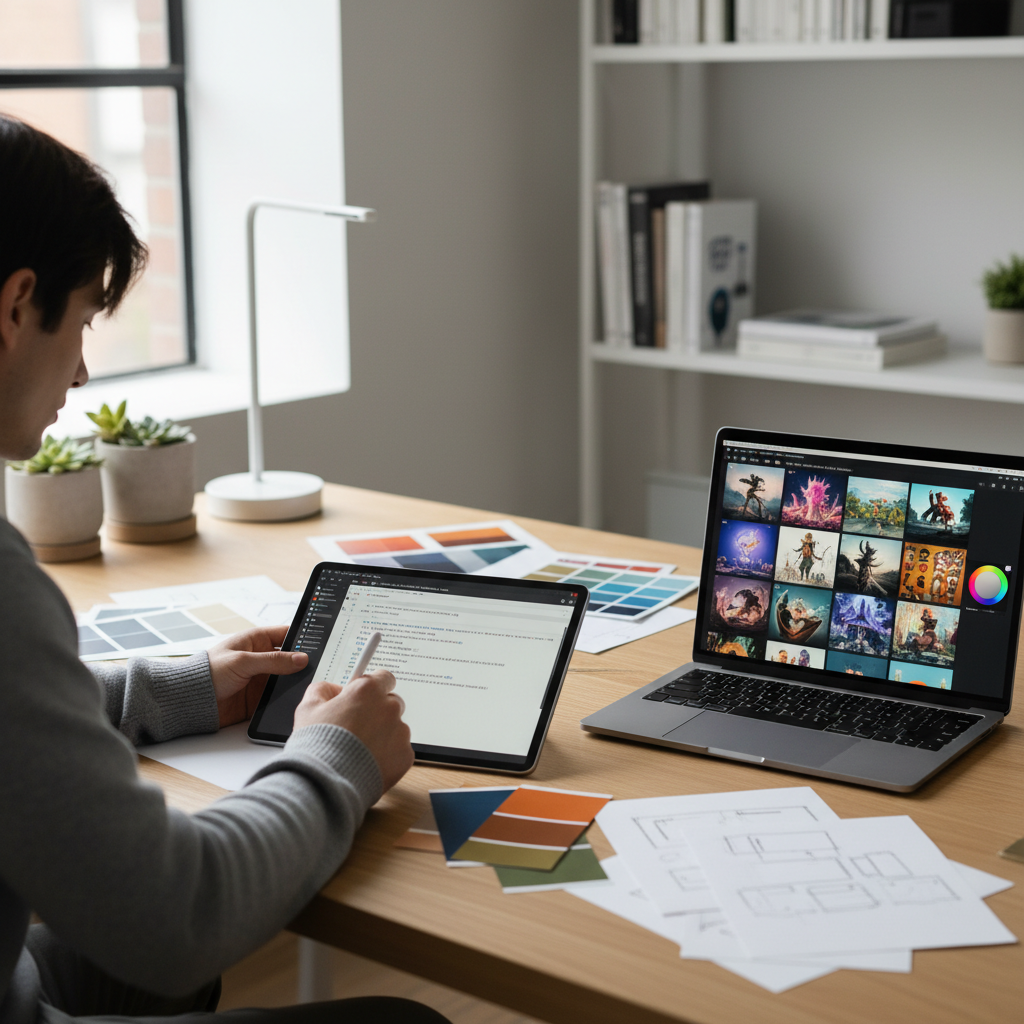
This guide gives you a practical prompt formula, a set of ready-to-run prompt templates across popular art directions, and a quick way to troubleshoot when results drift off-style. You’ll also get a compact table you can keep open while you iterate.
What makes a Midjourney art prompt “good” (and why most fail)
A “good” prompt is less about fancy adjectives and more about decision-making. You’re telling the model what to prioritize, otherwise it fills gaps with defaults that may not match your taste.
- Vague subject: “a character” invites random wardrobe, era, and mood.
- Conflicting style cues: “minimalist baroque hyperreal watercolor” fights itself.
- No composition intent: without camera angle, framing, or layout, you get awkward crops.
- Too many props: long object lists often create clutter or hallucinated details.
- No constraints: leaving aspect ratio, stylization, and quality untuned can create inconsistent series.
According to OpenAI, clear, specific instructions generally help models follow intent more reliably, that same principle applies when you craft prompts for visual generation: clarity beats decoration.
A reusable prompt formula (copy, then customize)
When you want reliable results, build prompts in blocks. This keeps your thinking clean and makes iteration easier.
Prompt blocks
- Subject: who/what, plus 1–2 defining traits
- Scene: environment and time context
- Action or moment: what’s happening, subtle is fine
- Style: art movement, medium, or artist-like direction (without name-dropping if you prefer)
- Lighting + color: mood, palette, contrast
- Composition: camera angle, focal length feel, framing, negative space
- Quality cues: detailed, crisp, clean lines, textured paint, etc.
- Parameters: aspect ratio and stylization choices
Fill-in template
[SUBJECT], [SCENE], [MOMENT], [STYLE/MEDIUM], [LIGHTING + COLOR], [COMPOSITION], [QUALITY CUES] --ar [RATIO] --stylize [VALUE]
If you’re building a series, lock 70% of the prompt, then only change the subject or scene. That’s how you get “same universe” consistency.
Best Midjourney prompts for art (by style) you can run today
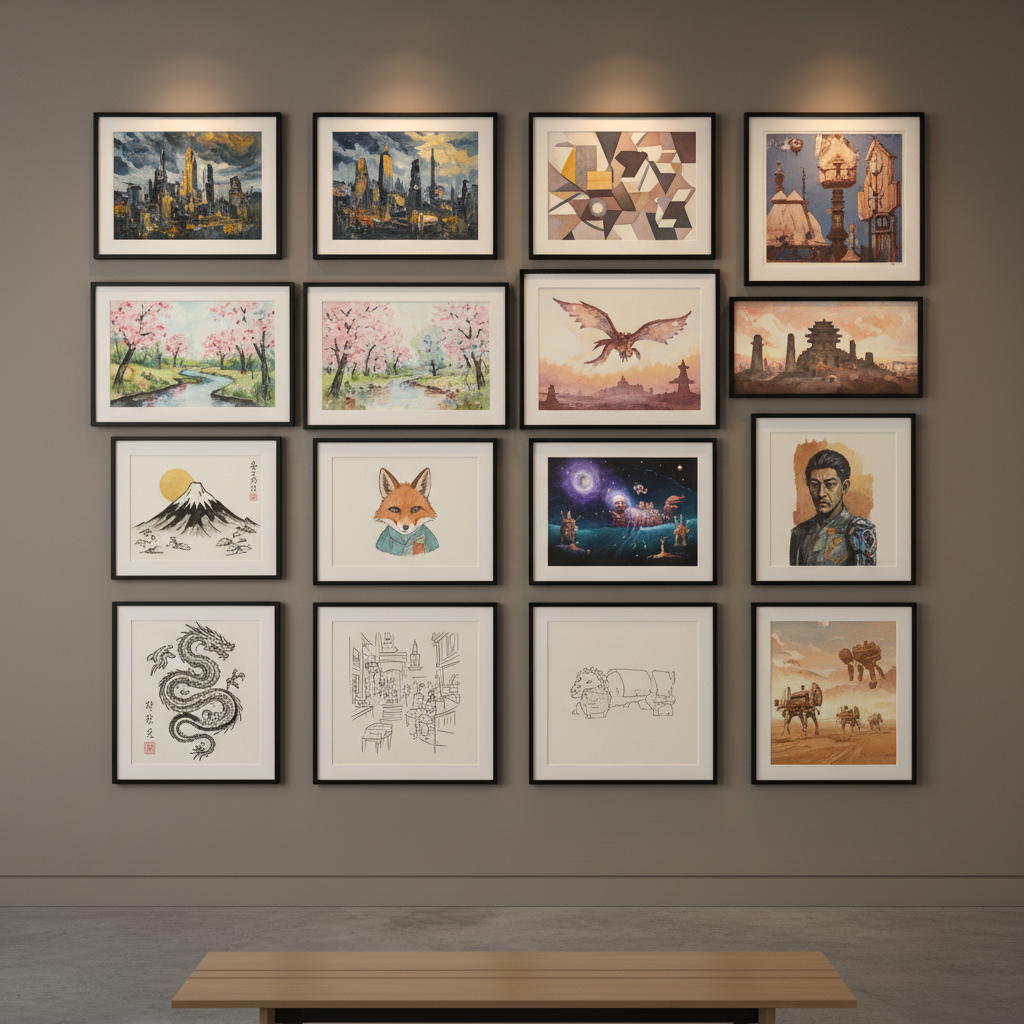
Below are ready prompts you can paste, then swap nouns, colors, and environments. They’re designed to be descriptive without turning into a cluttered paragraph.
1) Cinematic concept art
Prompt: lone astronaut walking through a flooded subway station, distant emergency lights reflecting on water, tense quiet moment, cinematic concept art, teal and amber color grade, volumetric fog, wide shot, strong leading lines, ultra-detailed, crisp focus --ar 16:9 --stylize 250
2) Contemporary editorial illustration
Prompt: busy barista at a minimalist coffee bar, motion blur in hands, modern editorial illustration, flat shapes with subtle grain texture, muted warm palette, clean negative space, centered composition, sharp silhouette readability --ar 4:5 --stylize 200
3) Watercolor landscape with texture
Prompt: coastal cliffs at dawn, sea mist rolling in, watercolor on cold-press paper, visible paper texture, soft washes, limited palette of indigo and peach, airy composition, horizon placed low, gentle detail --ar 3:2 --stylize 300
4) Ink line art portrait
Prompt: portrait of an elderly jazz musician, expressive wrinkles, ink line drawing with crosshatching, high contrast black on off-white paper, three-quarter view, tight framing, clean background, strong line economy --ar 2:3 --stylize 150
5) Surreal collage
Prompt: a floating library built from torn magazine pages, oversized moth wings as roof, surreal collage aesthetic, layered paper edges, analog texture, slightly desaturated colors, top-down cutout shadows, balanced composition --ar 1:1 --stylize 350
6) Retro sci-fi poster
Prompt: retro sci-fi travel poster for “Europa,” bold typography area reserved at top, simplified rocket silhouette, halftone print texture, limited palette red/cream/navy, clean geometric shapes, centered layout, poster-ready high contrast --ar 2:3 --stylize 200
7) Dark fantasy oil painting
Prompt: armored knight holding a lantern in an ancient ruin, creeping vines and broken statues, classical oil painting look, rich brush strokes, chiaroscuro lighting, warm lantern glow vs cool shadows, dramatic low angle, high detail --ar 3:4 --stylize 250
Quick table: what to tweak when results look “off”
This is the part most people skip, then they keep re-rolling without learning why the output keeps drifting.
| Problem you see | Likely cause | What to change in the prompt |
|---|---|---|
| Subject looks generic | Not enough distinctive traits | Add 1–2 specifics: age, material, era, signature detail |
| Messy background | Too many scene elements | Simplify scene, add “clean background” or “minimal environment” |
| Wrong mood | Lighting/palette unclear | Specify palette and lighting: “soft overcast,” “neon rim light,” “muted earth tones” |
| Bad crop / awkward framing | No composition instructions | Add “wide shot,” “head-and-shoulders,” “rule of thirds,” “negative space on right” |
| Style inconsistency in a set | Too many changing variables | Freeze style block, reuse parameters, change only subject/scene |
A fast self-check before you hit Enter
If you want best midjourney prompts for art outcomes consistently, use this checklist like a preflight. It takes 15 seconds and saves a lot of rerolls.
- Can you point to the main subject in one phrase? If not, simplify.
- Do you have exactly one dominant style direction? Two at most, if they truly fit.
- Did you specify framing? Wide, medium, close-up, or poster layout.
- Is the palette intentional? Even “monochrome charcoal” counts.
- Is there anything you listed that you don’t actually care about? Remove it.
Practical workflow: iterate like an artist, not a slot machine
The biggest quality jump usually comes from a calmer workflow. You test one variable at a time and keep what works.
Step-by-step
- Run a “style lock” draft: keep subject simple, focus on nailing medium, lighting, and composition.
- Pick one winner: don’t average four okay images, choose the one with the best fundamentals.
- Refine with small edits: adjust palette, lens feel, background complexity, then rerun.
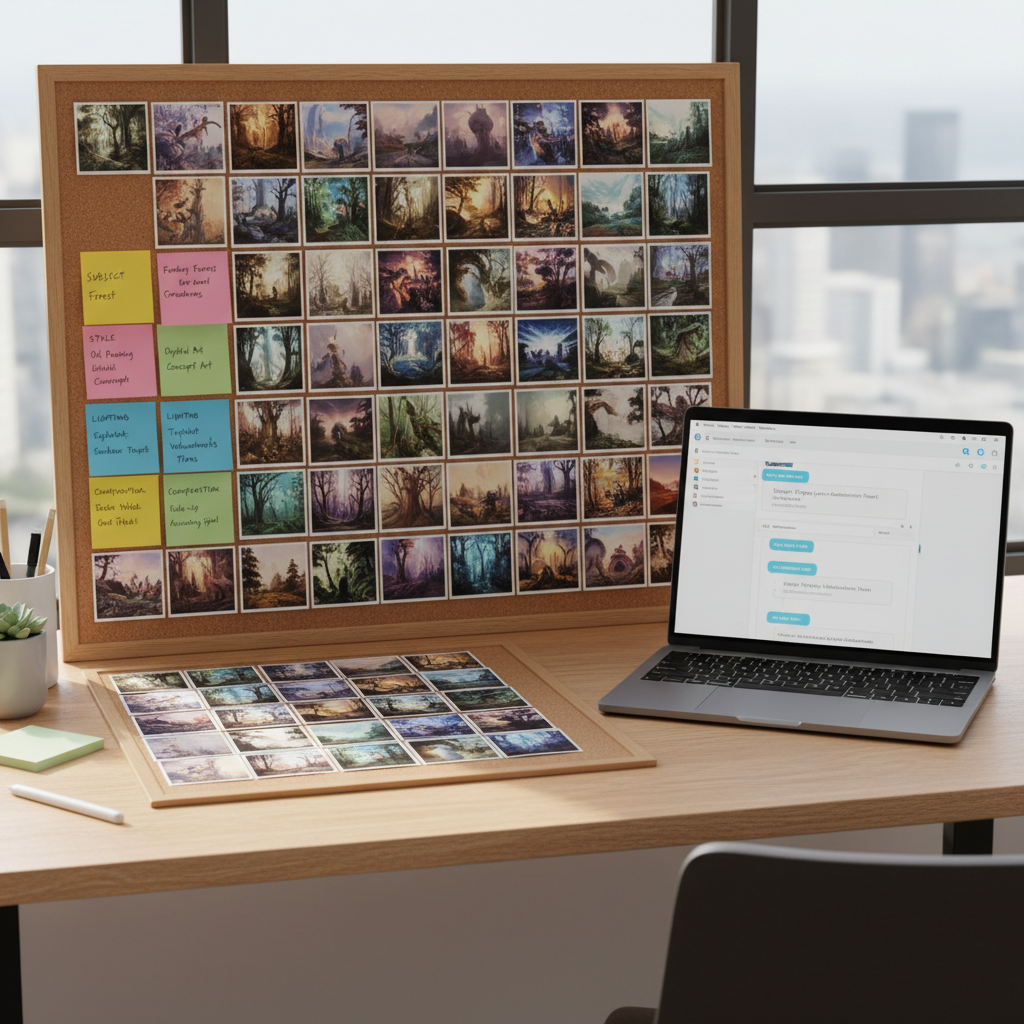
- Create a series prompt: reuse the same style block across 6–12 outputs for cohesion.
When you’re building a portfolio set, coherence often beats variety, even if each single image feels less “wow” on its own.
Common mistakes (the ones that waste the most time)
- Prompt stuffing: more adjectives rarely means more control, it usually means muddier priorities.
- Chasing every style at once: pick a lane per image, then do separate runs for other looks.
- Ignoring typography needs: if you want poster space, say so early in the prompt.
- Over-indexing on “ultra” words: “ultra-detailed” can help, but composition and lighting drive quality more.
- No intent for hands/faces: if anatomy matters, keep poses simple and framing tighter.
Also worth saying plainly, if you plan to use outputs commercially, you’ll want to review Midjourney’s current terms and any brand guidelines you work under, because licensing and acceptable use can change.
Conclusion: your next 10 minutes
Getting better results is less about secret phrases and more about writing prompts like you’re art-directing: pick a subject, choose a style, lock composition, then iterate carefully. If you want a quick win, take one prompt above, replace only the subject, and keep the style block untouched for five runs, you’ll see consistency fast.
If you’re collecting best midjourney prompts for art as a library, start a personal “prompt sheet” with your favorite palettes, camera angles, and mediums, then reuse them like presets.