
best phone sanitizers and cleaners is a search people make when their screen looks cloudy, their case feels grimy, and they’re not sure what is safe to use without wrecking an oleophobic coating.
Here’s the tricky part, most “cleaning” advice online skips the real-world details, like what your phone’s coating can handle, how to avoid moisture getting into ports, or why some disinfectants leave your screen worse than before. If you use the wrong product even once, you can end up with haze, streaking that never quite disappears, or a case that gets tacky.
This guide breaks down cleaner types (wipes, sprays, UV devices), when each makes sense, what to watch for on modern glass and cases, and a simple routine you can actually keep up with. I’ll also point out a few common misconceptions, because “more disinfectant” often backfires.
What “phone sanitizer” really means (clean vs disinfect)
Most people want two outcomes: remove visible grime, and reduce germs. Those are related, but not identical. Cleaning removes oils, makeup, dust, and gunk so the surface looks and feels right. Disinfecting targets microbes, and usually needs a product used as directed, including contact time.
According to CDC, cleaning with soap and water removes germs from surfaces, and disinfecting works best after cleaning when a surface is dirty. That matters for phones because skin oils can block disinfectants from working well, plus they create streaks if you skip the “clean first” step.
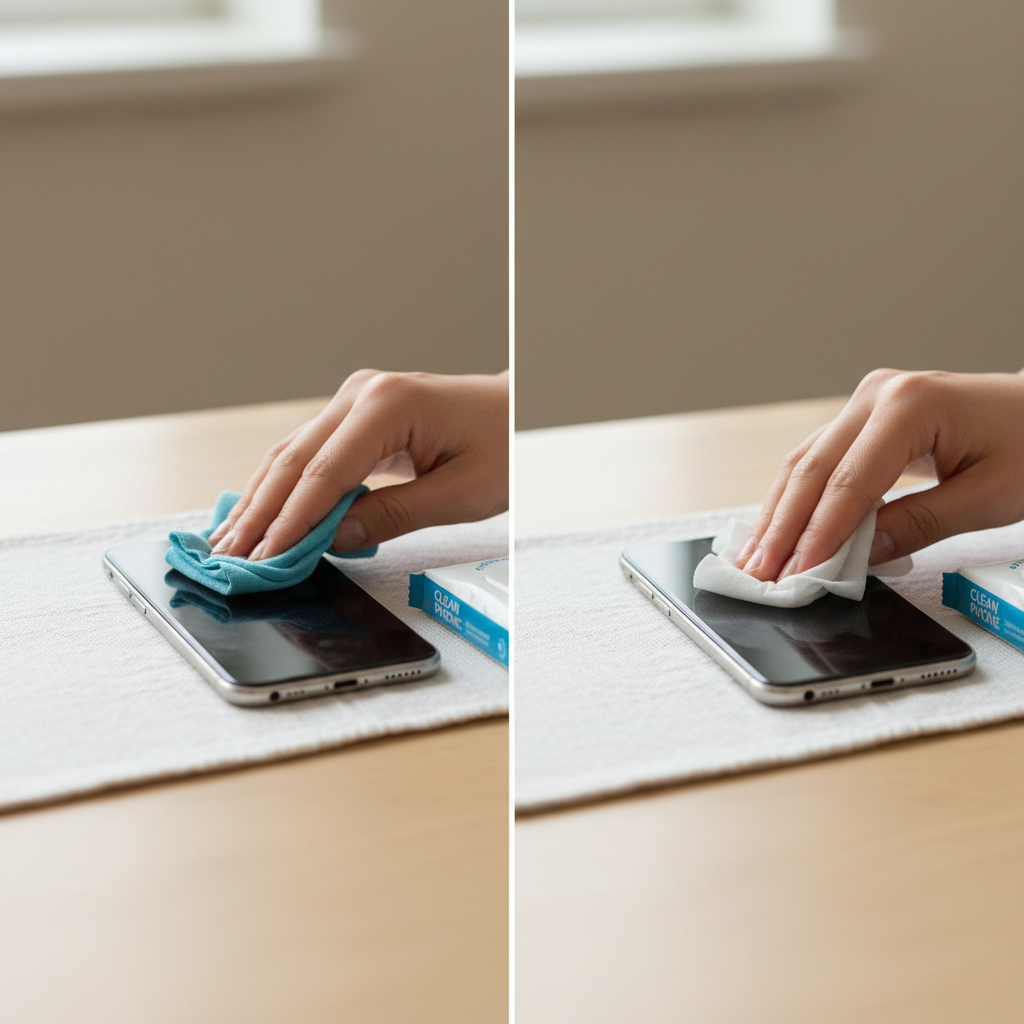
Also, some products marketed as “sanitizers” are really just screen cleaners. That’s not automatically bad, it just means you should match the product to your goal: cosmetics-level cleaning, or higher-risk situations where disinfecting feels warranted.
Common reasons phone cleaning goes wrong
If you’ve ever cleaned a phone and immediately regretted it, you’re not alone. These are the issues that show up most often in day-to-day use.
- Too much liquid: sprays run toward speaker grills, seams, and ports, and moisture is where damage starts.
- Harsh chemicals: strong solvents can degrade coatings or discolor some cases, even if the glass survives.
- “Paper towel polishing”: paper fibers can leave micro-scratches over time and make glare feel worse.
- Dirty cloth reuse: a microfiber used for weeks becomes an oil rag, so you spread grease instead of removing it.
- Skipping contact time: disinfecting wipes often need the surface to stay visibly wet for a period, but phones dry fast.
Many people get hung up on the “strongest” disinfectant and forget the practical requirement: you need a method you can do safely, quickly, and repeatedly without stressing the device.
A quick self-check: which cleaner type fits your situation?
Use this as a fast decision filter before you buy anything. If more than one fits, pick the option you’ll actually use consistently.
- Mostly fingerprints and makeup: a dedicated screen cleaner (spray used on cloth) + microfiber cloth.
- You share a phone or handle it at work a lot: disinfecting wipes that are safe for electronics, used carefully.
- You hate liquids near electronics: a UV phone sanitizer box can feel more comfortable, but still requires basic cleaning for smudges.
- Kids’ devices, sticky cases: soap-and-water wash for removable cases, plus screen-safe cleaning for the phone itself.
- Cracked screen or loose glass: avoid wet methods near cracks, consider professional advice or repair first.
Comparison table: sprays vs wipes vs UV phone sanitizers
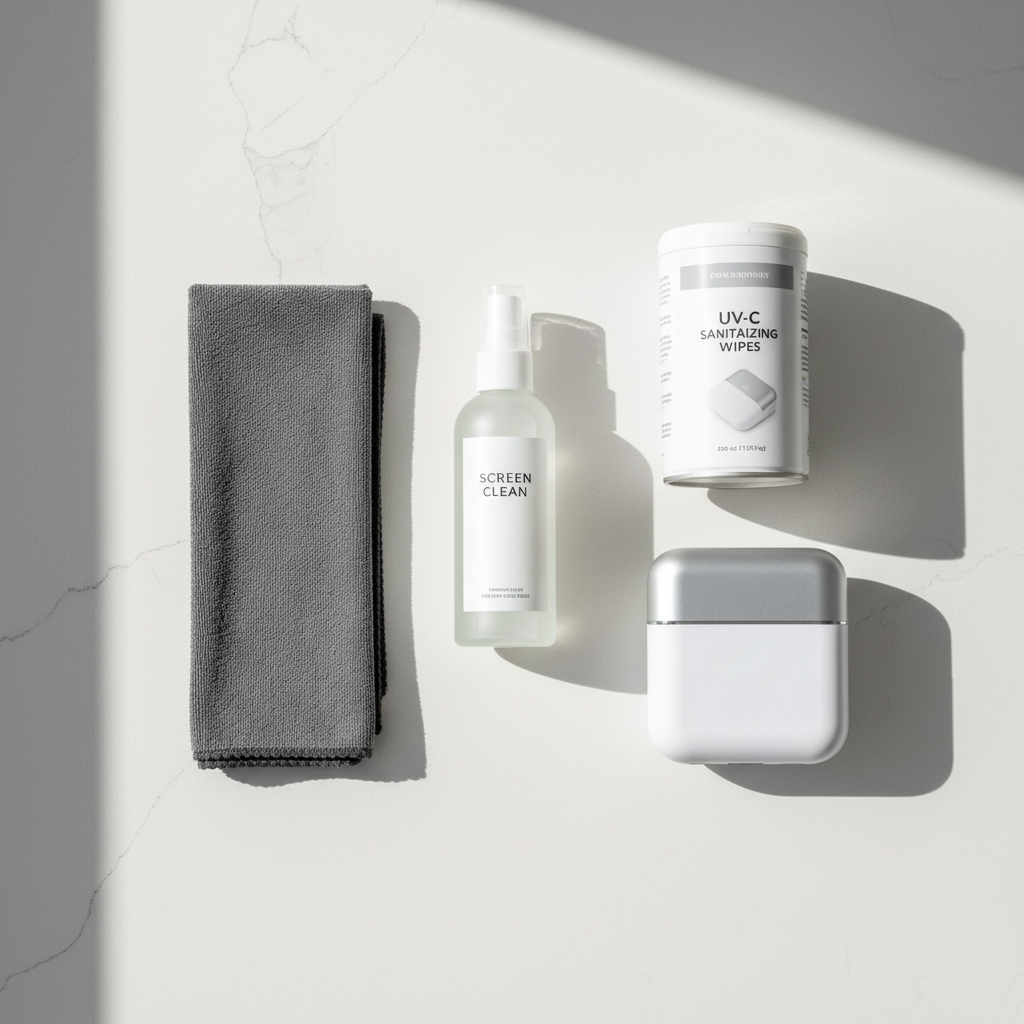
Below is a practical comparison, not a “winner-takes-all” ranking. Your best phone sanitizers and cleaners choice depends on your tolerance for liquids, your routine, and what you’re trying to accomplish.
| Type | Best for | Upsides | Trade-offs |
|---|---|---|---|
| Screen-cleaning spray (used on cloth) | Daily smudges, clarity | Low residue when used correctly, cost-effective | Easy to over-apply if sprayed directly on phone |
| Disinfecting wipes (electronics-friendly) | Quick disinfecting, travel | Convenient, controlled moisture | Can streak, may need contact time, can dry out quickly |
| 70% isopropyl alcohol (sparingly, on cloth) | Occasional deeper clean | Accessible, evaporates fast | Can be harsh if overused, avoid pooling near openings |
| UV phone sanitizer box | People who want minimal moisture | No wet chemicals on device surface | Does not remove oils/grime, needs correct exposure, can miss shadowed areas |
How to clean your phone safely (a routine that avoids damage)
best phone sanitizers and cleaners still need a good routine, because technique is half the result. This is a conservative approach that fits most modern phones.
Step-by-step (2–4 minutes)
- Power off and unplug accessories. You want no charging cable and no active speakers.
- Dry wipe first with a clean microfiber cloth to lift loose grit, that reduces scratch risk.
- Apply cleaner to the cloth, not the phone. One or two light mists is usually enough.
- Wipe front and back with gentle pressure, then use a dry side of the cloth to buff.
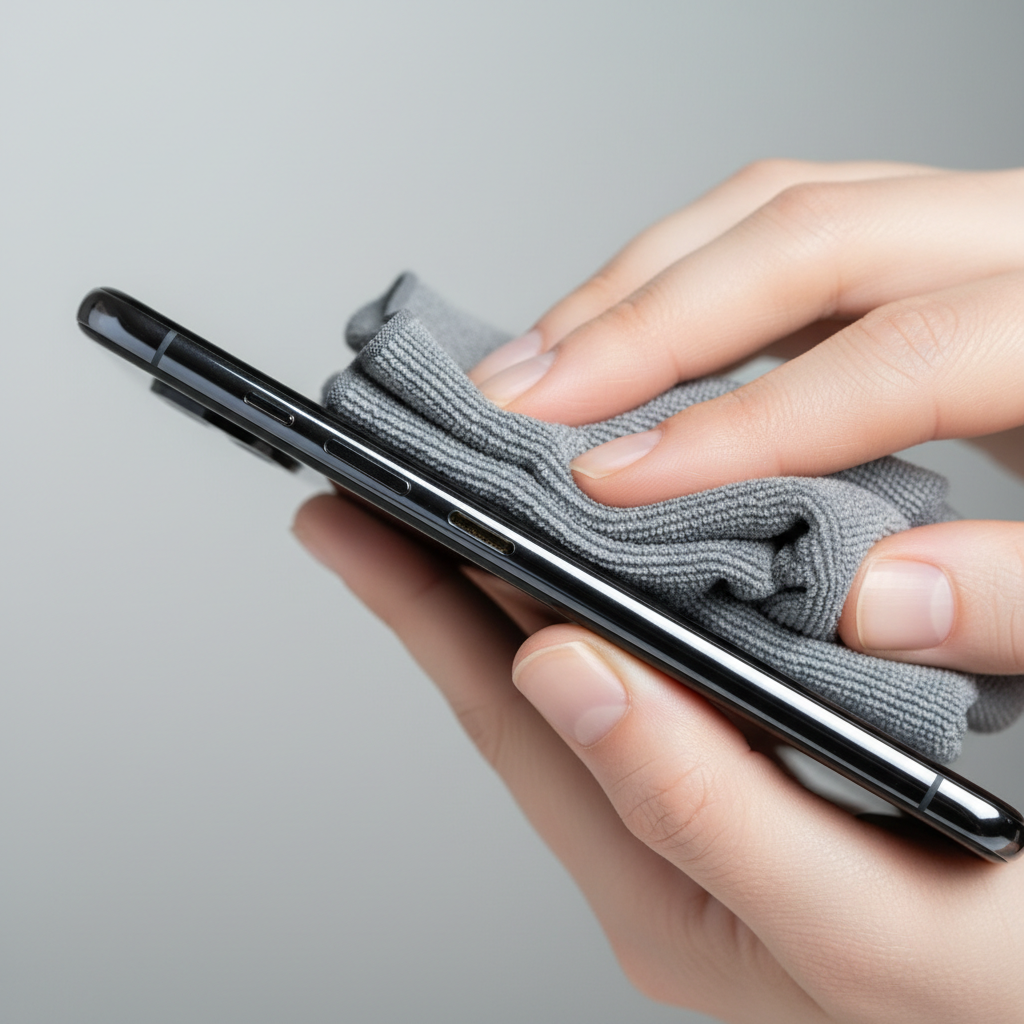
- Detail the edges with a barely dampened corner of the cloth, avoid pushing liquid toward ports.
- Let it fully dry before powering on or putting it into a tight case.
If you’re disinfecting, use the wipe so the surface stays damp briefly, then let it air-dry. If it dries instantly, you may not be getting meaningful disinfecting benefit, and in many cases it’s better to clean well and disinfect only when it makes sense for your context.
Phone case and accessories: where the real grime hides
People obsess over the screen, but the case lip, camera bump edge, and the area near the charging port usually hold the most buildup. If you keep cleaning the glass but never address the case, the phone starts feeling dirty again within hours.
- Silicone/TPU cases: often tolerate gentle soap-and-water wash, then air-dry completely.
- Leather cases: can stain or dry out, use a leather-appropriate cleaner and go light.
- Clear cases: can yellow over time; harsh cleaners may accelerate clouding in some materials.
- Screen protectors: usually easier to clean than bare glass, but cheap coatings can haze if scrubbed aggressively.
According to Apple, using a 70 percent isopropyl alcohol wipe or Clorox Disinfecting Wipes on iPhone exterior surfaces is acceptable in certain guidance, while bleach and abrasive materials are discouraged. Manufacturer guidance changes over time and varies by model, so it’s worth checking your device brand’s current support page if you’re unsure.
Key buying criteria: what to look for in “best” options
When you shop for best phone sanitizers and cleaners, the product label matters less than a few practical traits that reduce mistakes.
- Residue control: “streak-free” claims vary, but formulas designed for screens tend to haze less than multipurpose cleaners.
- Delivery method: pump spray plus microfiber is easier to control than aerosol, wipes are easier than open liquid bottles on the go.
- Compatible materials: look for notes about glass, coated screens, plastics, and case materials.
- Cloth quality: a dense microfiber cloth does more than the liquid, thin freebies often smear.
- Portability: if it won’t fit your bag or desk setup, you’ll stop using it and that becomes the “worst” option.
Quick rule: if a product smells like a strong household solvent, test it on a small area of a removable case first, not your screen.
Mistakes to avoid (because they feel “clean” but aren’t)
Some habits look thorough, but they either risk damage or don’t improve hygiene much.
- Spraying directly onto the phone, especially near speakers and microphones.
- Using bleach solutions or harsh bathroom cleaners on glass and coatings.
- Compressed air into ports when moisture is present, it can push liquid deeper.
- Over-scrubbing the camera lenses, camera coatings can scratch easier than you expect.
- Cleaning while charging, it’s a small risk but a needless one.
If you’re dealing with bodily fluids, shared devices in healthcare settings, or immunocompromised household members, it may be smart to follow a stricter protocol and consult your workplace guidelines or a qualified professional. Phones sit in a weird space between “personal item” and “high-touch surface,” so context matters.
Practical recommendations: a simple kit for most people
You don’t need a drawer full of products. A small, repeatable setup usually works better than chasing the strongest disinfectant.
- At home: microfiber cloths (rotate and wash), screen-safe spray, occasional disinfecting wipes for higher-risk weeks.
- At work or travel: a small wipe pack + a backup microfiber, because wipes alone often streak.
- Low-liquid preference: UV box plus a microfiber routine for oils, since UV does not “de-smudge” glass.
According to EPA, disinfectants should be used according to their label directions to be effective and safe. In practice, that means you want a product with clear instructions, and you want to follow them rather than improvising on your most expensive device.
Conclusion: keeping your phone clean without overthinking it
The best phone sanitizers and cleaners are the ones you can use consistently, without soaking your device or roughing up the screen. If your main problem is fingerprints and haze, prioritize a controlled screen-cleaning spray plus good microfiber. If your concern is disinfecting, pick a method you can do carefully and as directed, and don’t skip the initial “remove oils” wipe.
If you want one action to take today, wash or replace your microfiber cloth and clean your case along with the phone, that alone fixes the “it gets dirty again immediately” feeling for a lot of people.