
Best budget portable projectors for travel are the ones that stay bright enough in real-world lighting, fit in your bag, and don’t fall apart the moment you rely on them in a hotel or campsite.
If you’ve ever bought a “mini projector” that looked great online but turned into a washed-out rectangle on the wall, you already know the trap: spec sheets can be noisy, and cheap models often exaggerate brightness or resolution.
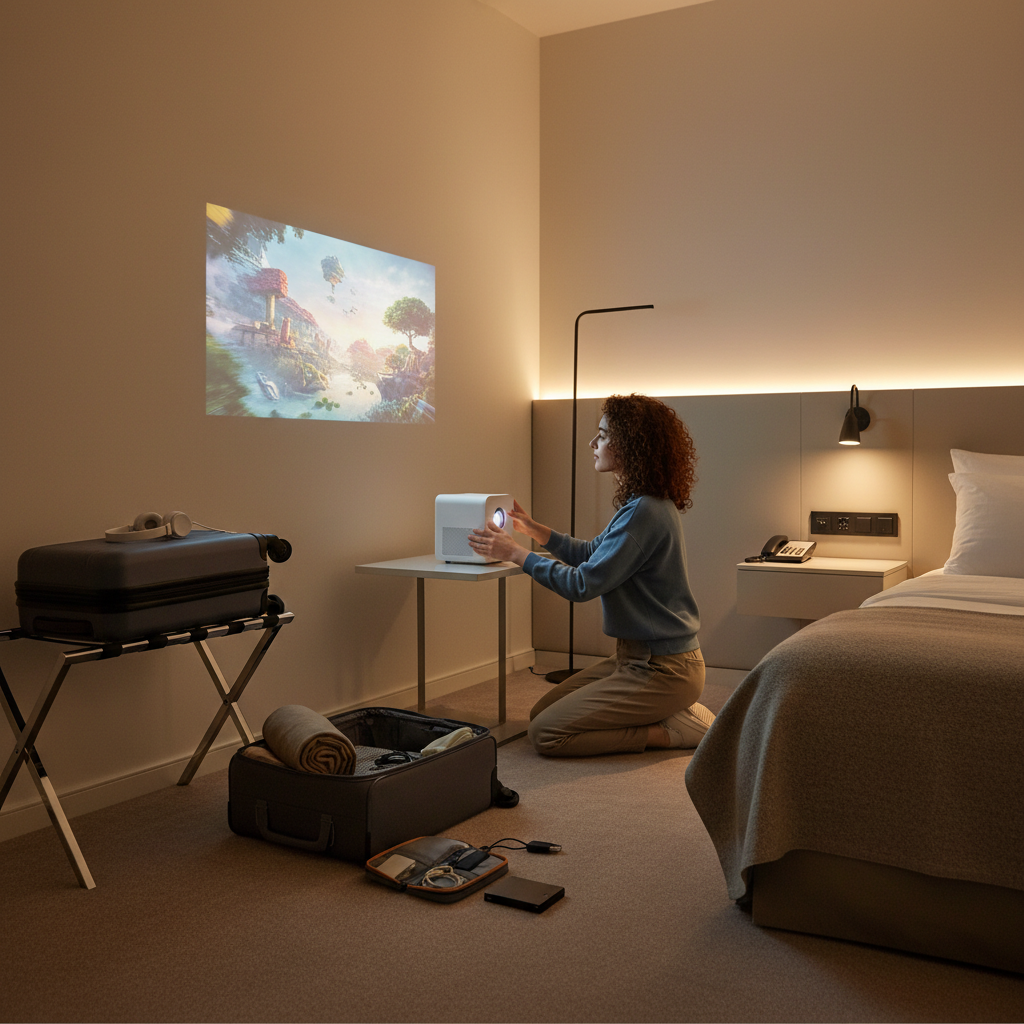
This guide focuses on practical buying signals, a quick comparison table, and setup advice so you can pick a travel-friendly projector that makes sense for your budget and your typical trip.
What “budget travel projector” really means (and what it doesn’t)
In most shopping carts, “budget” means under about $200–$300, give or take sales. At that price, you usually trade off one or more of these: peak brightness, built-in audio, lens quality, battery size, and long-term durability.
Also worth clearing up: many ultra-cheap listings use confusing brightness terms. Some show “lux” or inflated “LED lumens,” which won’t map cleanly to the brightness you experience on a wall.
According to ANSI (American National Standards Institute), ANSI lumen measurements follow a standardized approach, which is why you’ll see experienced reviewers and brands lean on “ANSI lumens” when they can.
The short list: what to prioritize for travel
If you only remember a few things when shopping for best budget portable projectors for travel, make it these. They’re the difference between “fun once” and “I actually use it.”
- Real brightness for your use case: dark room movie nights can work with lower brightness, but shared rooms, RVs, and early-evening patios need more.
- Auto keystone + focus that behaves: travel setups are rarely perfectly centered, so good correction saves time and frustration.
- Power plan: USB-C PD, a reliable battery, or at least easy access to an outlet. Don’t assume “battery built-in” means “movie-length battery.”
- Streaming strategy: built-in smart apps can be convenient, but a small streaming stick plus HDMI often stays smoother over time.
- Audio reality check: tiny speakers are fine for a quiet hotel room, but outdoors you’ll want a small Bluetooth speaker or soundbar.
Quick comparison table (what to check before you buy)
This table isn’t about specific models, because prices and availability shift constantly. Instead, it’s a cheat sheet of “good enough” targets that typically separate decent travel picks from regret purchases.
| Travel scenario | Suggested brightness | Native resolution | Audio plan | Portability notes |
|---|---|---|---|---|
| Hotel room (lights mostly off) | ~200–400 ANSI lumens (often workable) | Native 720p minimum | Built-in ok, speaker optional | Tripod mount helps, quiet fan matters |
| Airbnb living room (some ambient light) | ~400–800 ANSI lumens | Native 1080p preferred | External speaker recommended | Auto keystone and fast setup matter |
| RV / van at night | ~300–600 ANSI lumens | Native 720p–1080p | External speaker often better | USB-C power and compact size are key |
| Backyard / campsite (after dark) | ~500–1000 ANSI lumens | Native 1080p preferred | External speaker basically required | Consider a screen, wind and dust protection |
A practical self-check: which type of buyer are you?
People get better outcomes when they buy for their actual routine, not an imagined “perfect” movie night. Pick the closest match.
- Carry-on minimalist: you need compact size, simple controls, and easy power. You’ll accept “good enough” image in darker rooms.
- Road-trip couple/family: you need faster setup, stronger brightness, and reliable HDMI input. You’ll likely bring a small speaker.
- Outdoor movie host: you need higher brightness, a screen plan, and better audio. Battery-only setups often disappoint unless you design around them.
- Business + fun traveler: you need readable text, decent color, and stable focus. Native 1080p becomes more important.
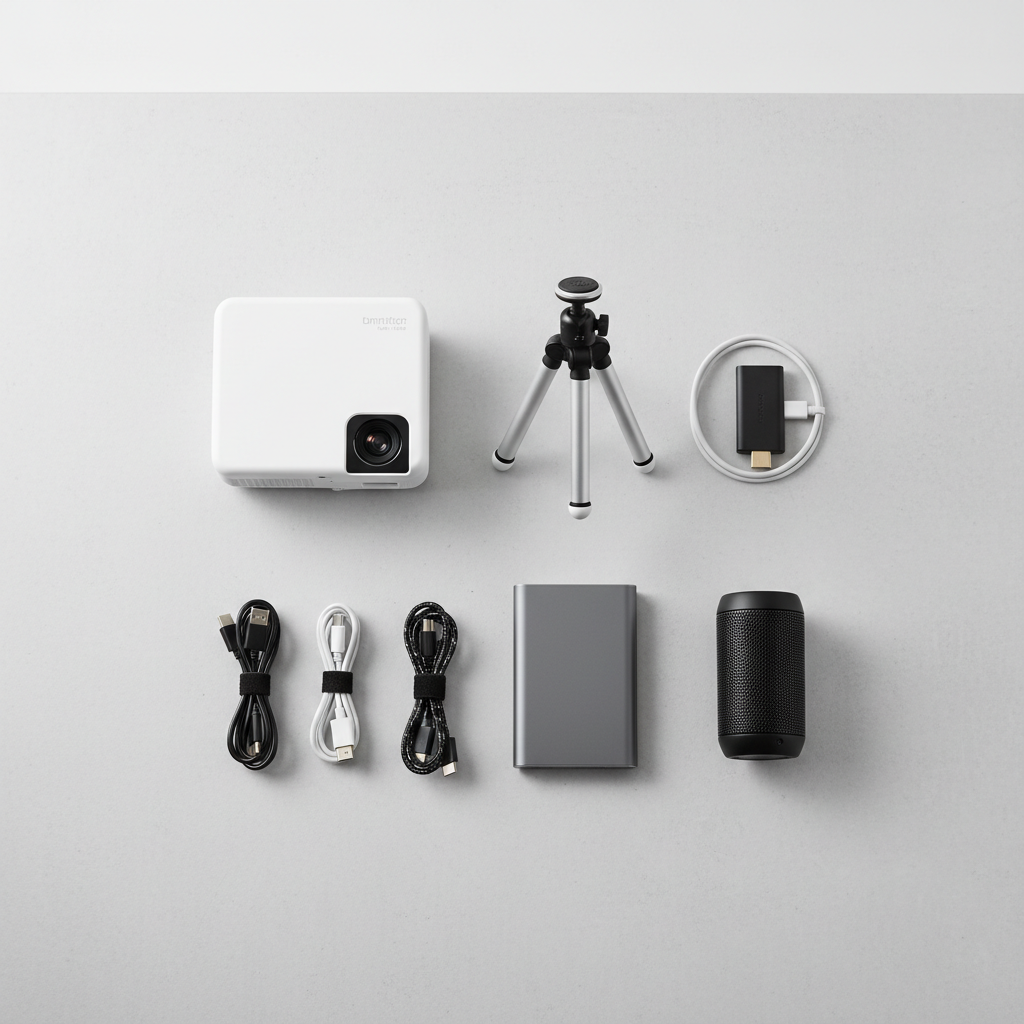
If you’re split between two categories, buy for the harder one. Most complaints happen when someone shops for hotel use, then expects it to perform like an outdoor projector.
How to shop smarter: specs that matter (and marketing that doesn’t)
Brightness: look for ANSI lumens when possible
When a listing hides ANSI lumens and only shows “lux” or vague brightness claims, treat it cautiously. That doesn’t automatically mean it’s bad, but it often means the number won’t translate well to real viewing.
Native resolution vs “supports 1080p/4K”
“Supports 1080p” often means it can accept a 1080p signal, not that it can display it natively. For travel movies, native 720p can still look fine on smaller images, but if you want a larger picture or you’ll watch subtitles, native 1080p usually feels noticeably cleaner.
Throw ratio and placement flexibility
Travel spaces can be tight. A projector that needs a long distance for a big image may force awkward setups. If the listing shows a throw distance chart, pay attention to it, and be realistic about your room size.
Focus consistency and edge sharpness
This is where budget units vary wildly. Some look sharp in the center but fuzzy in the corners, especially when keystone correction is pushed hard. If you plan to use keystone a lot, expect a small sharpness penalty.
Noise and heat
Small projectors cool with small fans, so fan noise is normal. If you’re sensitive to it, prioritize models known for quieter operation, or plan to place it farther away and use a longer HDMI cable.
Real-world setup: a simple checklist that saves your night
Even the best budget portable projectors for travel can look bad if setup is rushed. This is the quick routine that tends to prevent most “why is this awful?” moments.
- Start darker than you think you need: turn off overhead lights, close curtains, then add light back only if necessary.
- Project onto something predictable: a matte wall works, but a small foldable screen often boosts perceived contrast.
- Keep keystone modest: move the projector physically first, then use correction as a finishing touch.
- Use a streaming stick + HDMI when apps feel flaky: it’s boring advice, but it avoids a lot of login and Wi‑Fi headaches.
- Audio: plan for it: pair a Bluetooth speaker early, don’t wait until everyone sits down.
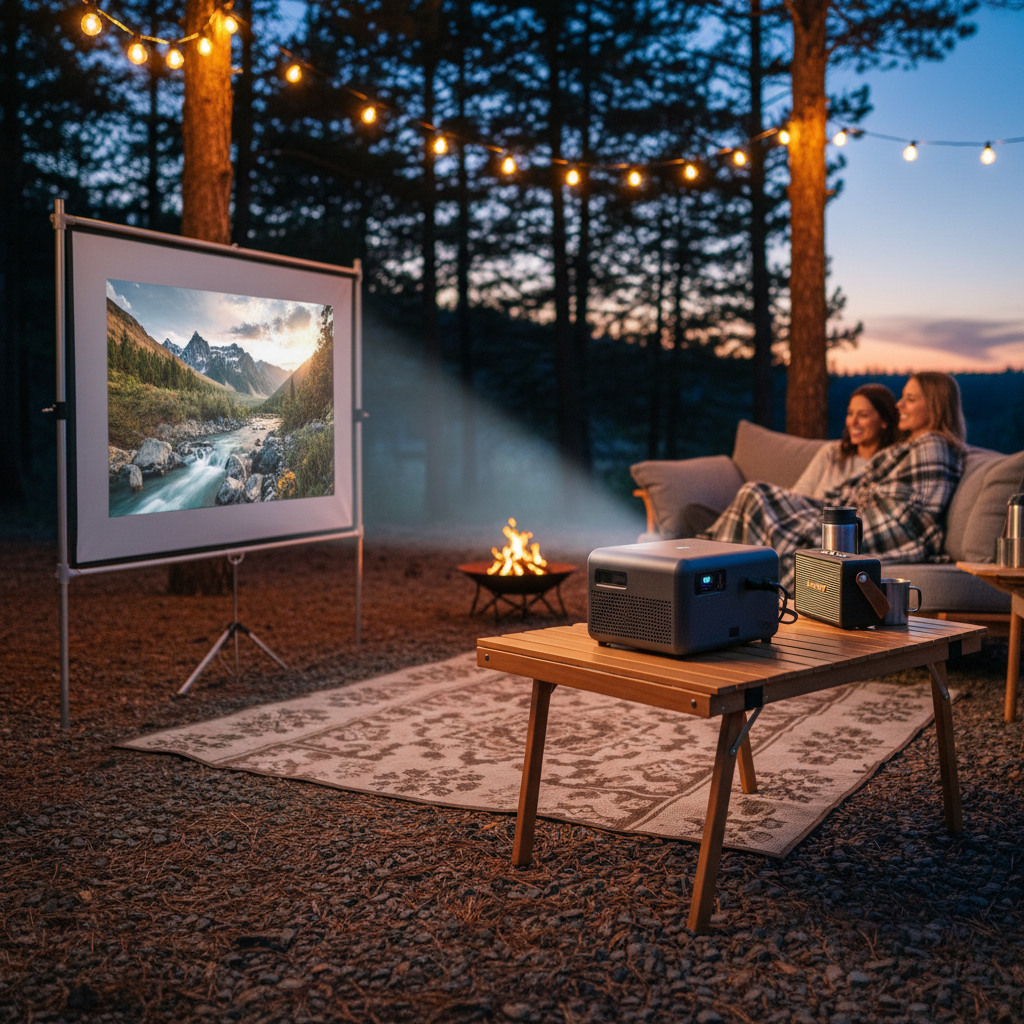
One more thing people forget: power. If you’re using a power bank, confirm it can output the right USB-C PD wattage for your projector, otherwise you’ll get random shutdowns or it simply won’t charge while running.
Common mistakes (that make budget projectors feel worse than they are)
- Expecting daylight performance: many budget units struggle even in bright indoor rooms, and that’s not “user error.”
- Going too big on image size: bigger image means lower perceived brightness, so pull the projector closer if the picture looks dull.
- Relying on built-in speakers outdoors: wind and open space swallow sound quickly.
- Assuming “smart projector” equals “fast projector”: cheaper onboard systems can lag; an external streamer can feel smoother.
- Ignoring return windows: travel gear needs a real test at home before the trip.
Conclusion: a simple way to choose without overthinking
If you want best budget portable projectors for travel without spiraling into spec comparison, decide where you’ll use it most, then buy enough brightness for that setting, and treat audio and power as part of the kit, not an afterthought.
Your next step can be simple: pick two or three candidates that list ANSI lumens (when available), confirm native resolution, verify inputs you’ll actually use, then test it in your home with the same lighting you expect on the road. If it passes that test, it usually travels well.